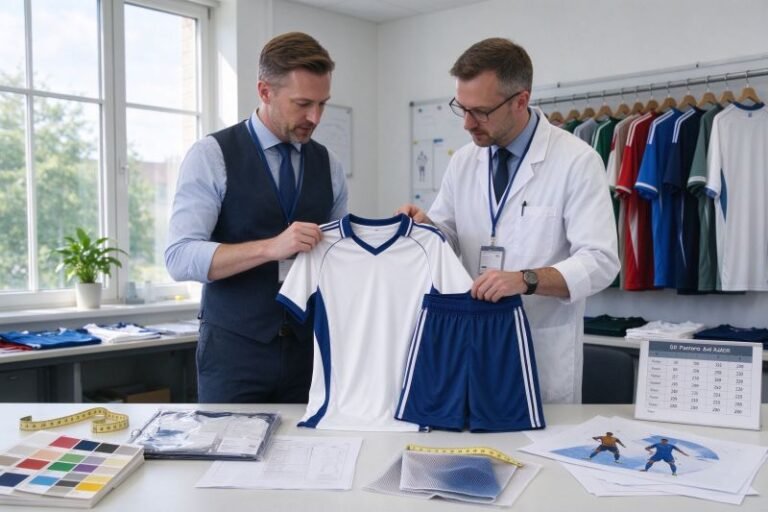
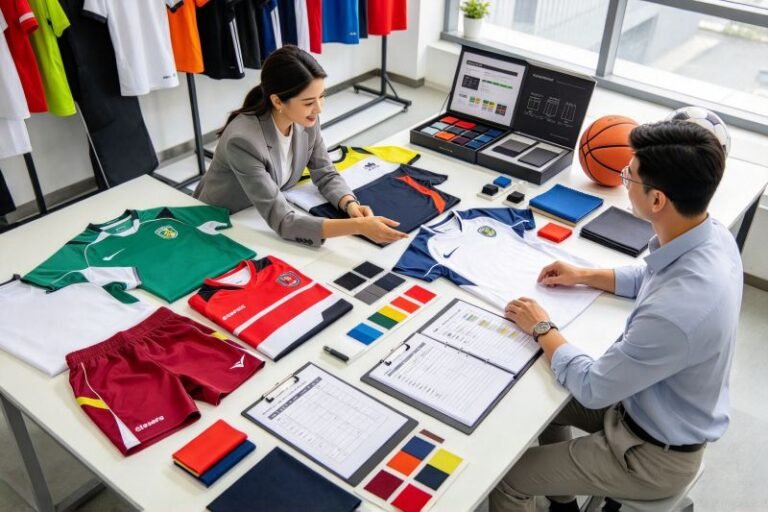
Best Cycling Jersey Manufacturers for Clubs and Retailers
Choosing cycling jersey manufacturers is a product-development decision, not only a price comparison. A club needs consistent colors, reliable sizing, member-friendly ordering, and a practical reorder route. A retailer also needs private labels, packaging, margin control, repeatable fabrics, and bulk quality records. Both buyers must manage fit, sublimation, zippers, pockets, grippers, seams, and delivery without allowing a polished sample to hide a weak production process.
This guide compares six public-facing custom cycling apparel candidates. Official pages were reviewed for category relevance, customization intent, service model, and buyer fit. Research into cycling jersey manufacturers must separate direct product evidence from unverified operational claims. Website statements are discovery evidence, not independent audits. The exact query was assessed on November 25, 2026, for English-language B2B intent, but live Google results were unavailable in the working environment. The correct research status is SERP not independently verified.
The sequence is not a search ranking. Cycling jersey manufacturers can operate as private-label factories, custom teamwear suppliers, direct producers, design platforms, or supply-chain coordinators. Each model can work when roles are clear. Buyers should verify the legal seller, production location, product ownership, sample stages, commercial terms, quality controls, and remedies before committing to an order.
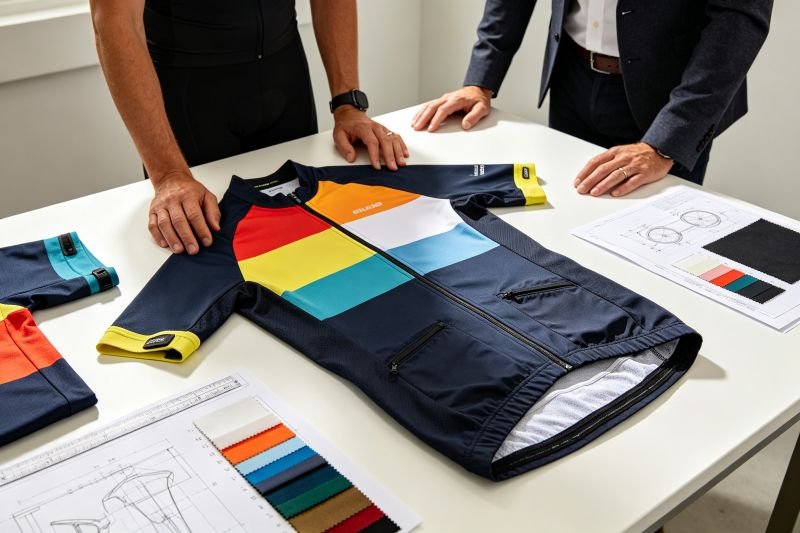
How We Assessed Cycling Jersey Manufacturers
The first screen was direct product evidence. Every candidate needed an official page for custom cycling jerseys, cycling kits, road-bike apparel, or a cycling-specific service. A general sportswear statement was not enough. The second screen was commercial relevance: cycling jersey manufacturers needed to show a model useful to clubs, teams, event organizers, distributors, or private-label retailers.
The review then separated visible evidence from facts that require direct confirmation. A website can show jersey options and a design tool, but it cannot by itself prove the current factory, order capacity, material source, quality system, or terms for a specific buyer. A candidate remains a sourcing lead until the buyer verifies documents, facilities, comparable samples, test results, and a written production route.
- Company and location: identify the legal seller, development office, sample room, print operation, cut-and-sew site, and export entity. Do not assume that one address performs every process.
- Product category: confirm road jerseys, MTB tops, skinsuits, bibs, jackets, gilets, warmers, or accessories individually. Expertise in one category does not automatically transfer to another.
- MOQ and ordering model: obtain current quantities by style, design, color, and size. Separate a club team-store service from an OEM wholesale minimum.
- Sampling: define fabric swatches, color strikes, fit samples, size sets, pre-production samples, and shipment references. Record the approval owner and correction cycle.
- Special processes: qualify sublimation, full-length zipper installation, laser-cut sleeves, bonded hems, silicone grippers, reflective transfers, mesh zoning, and waterproof construction separately.
- Cooperation model: distinguish private label, custom club kits, online team stores, direct manufacturing, design support, and managed partner production.
JH Sportswear Factory is the publisher and an affiliated candidate. Its first-party entry receives the same verification questions used for the other cycling jersey manufacturers. Inclusion does not establish superiority, and the list does not guarantee manufacturing ownership, quality, or availability.
Comparison of 6 Cycling Jersey Manufacturers
| Candidate | Public evidence reviewed | Potential buyer fit | Location, MOQ, and model checks |
|---|---|---|---|
| 1. JH Sportswear Factory (first-party) | Dedicated cycling-jersey category within a multi-sport uniform site | Clubs and retailers exploring cycling jerseys with other custom teamwear | Confirm legal entity, assigned factory, cycling references, current MOQ, fabric route, sample gates, and private-label terms |
| 2. Berunwear | Dedicated custom cycling-clothing page and broader sportswear customization offer | Private-label retailers and clubs planning coordinated cycling collections | Confirm production location, factory or coordinator role, quantities, development stages, process ownership, and inspection |
| 3. Tonton Sportswear | China cycling-kits category with custom and wholesale positioning | Wholesale buyers, clubs, and teamwear programs needing jersey-and-short sets | Confirm exact facility, material options, MOQ by design, artwork controls, size sets, packaging, and export terms |
| 4. JAKROO | Road-bike custom apparel page, design routes, catalogue, and team-store features | Clubs and organizations that value design support and member ordering tools | Confirm contracting entity, production location, quantities, current schedule, team-store terms, and quality responsibility |
| 5. owayo | Custom cycling-jersey range plus official manufacturing, sample, and flexible-order pages | Clubs, teams, and buyers wanting a direct custom-production workflow | Confirm current product minimums, production schedule, sample route, color control, destination costs, and retailer branding options |
| 6. Scimitar Sportswear | Custom cycling solution for clubs and teams with cycling collections | Clubs, events, charities, and organizations sourcing coordinated cycling apparel | Confirm legal seller, manufacturing route, order quantities, sample service, recycled-material claims, inspection, and reorders |
This comparison identifies useful starting points, not equivalent offers. Cycling jersey manufacturers may bundle design, samples, labels, individual member shipping, duties, and after-sales support differently. Normalize the quotation scope before comparing unit price. A lower garment price can become more expensive after artwork, color sampling, zippers, packaging, tests, freight, and replacement policies are added.
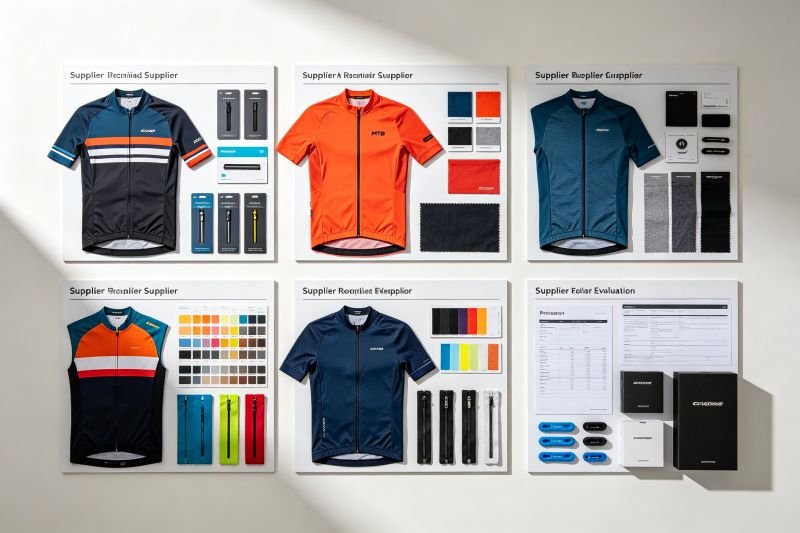
Candidate Profiles and Buyer-Fit Notes
1. JH Sportswear Factory: affiliated multi-sport candidate
JH Sportswear Factory publishes a dedicated cycling-jersey category within a broader custom uniform site. The page gives first-party evidence that cycling jerseys are part of the public offer. Because this article appears on the same commercial network, buyers should treat the entry as affiliated information rather than an independent endorsement.
The candidate may suit clubs or retailers that want cycling jerseys alongside football, basketball, baseball, or rugby teamwear. Before comparing it with specialist cycling jersey manufacturers, ask for recent products with equivalent fit, zipper, pockets, gripper, sleeve construction, and fabric weight. Confirm the factory assigned to the order, current material codes, sampling sequence, bulk inspection, private labels, and repeat-order controls.
2. Berunwear: custom cycling clothing and private-label positioning
Berunwear maintains a dedicated custom cycling-clothing page. Its wider site presents custom sportswear, activewear, private-label support, and a broad product-development offer. This public evidence makes it relevant to retailers and clubs that want jerseys, shorts, and related pieces discussed as one collection.
Among cycling jersey manufacturers, Berunwear’s breadth makes the operating model important. Its official about page presents factory and customization claims, but buyers should verify the legal seller, proposed production site, printing route, fabric mill, sample room, and any partner facilities for their order. Ask which cycling products represent current bulk work and which construction details are completed in-house.
3. Tonton Sportswear: China cycling-kit category
Tonton Sportswear publishes a China cycling-kits category with custom, factory, and wholesale language. The company site also presents a multi-sport uniform range. This may appeal to wholesale buyers, clubs, or distributors that need coordinated jersey-and-short sets and other team apparel.
Buyers reviewing cycling jersey manufacturers should still qualify technical cycling depth. Ask Tonton for comparable full-zip jerseys, bibs, and club kits using the intended fabrics and artwork process. Confirm sizing, pocket reinforcement, zipper source, gripper type, print-strike approval, production location, roster or member data handling, and the remedy for color or size errors.
4. JAKROO: design and team-order workflow
JAKROO’s road-bike page presents custom cycling jerseys and two design routes. The official site also exposes a cycling catalogue, team-store search, artwork specifications, fit guidance, and design tools. This service structure may fit clubs that want members to order through an organized platform rather than collecting every size and payment manually.
Compared with factory-focused cycling jersey manufacturers, JAKROO emphasizes a managed design and ordering workflow. Its public about page identifies a US headquarters, while the buyer should directly confirm the production location and contracting entity for the proposed order. Clubs should review team-store rules, sample access, member shipping, minimums, reorder pricing, replacement handling, data privacy, and the end date of each ordering window. Retailers should ask whether private labels, packaging, and wholesale resale terms are available.
5. owayo: direct custom-production evidence
owayo publishes a broad custom cycling-jersey range that includes multiple fits and product options. Its official manufacturing page presents research, production, and quality control as in-house activities. A separate official page discusses flexible order quantities.
This visible operating detail can help clubs compare the direct-production route with other cycling jersey manufacturers. Buyers should still confirm the exact product, current order quantity, schedule, sample options, fabric specification, color-management process, destination taxes, and reorder policy. A retailer also needs written confirmation of branding, packaging, resale, and territory terms.
6. Scimitar Sportswear: club, team, and organization programs
Scimitar Sportswear publishes a custom cycling-clothing solution for clubs and teams. Its site also includes cycling collections, a club sample request, charity cycling, and recycled sportswear content. The model may fit clubs, events, charities, and organizations looking for coordinated custom products and support.
Public sustainability or material claims should be verified at product and order level. Ask for the specific fabric code, recycled-content evidence, printing route, production location, sample plan, inspection method, packing, and reorder process. When comparing cycling jersey manufacturers, confirm whether the supplier produces directly, manages partners, or combines both approaches.
Technical Checks Before Choosing Cycling Jersey Manufacturers
Define fit, riding position, and product level
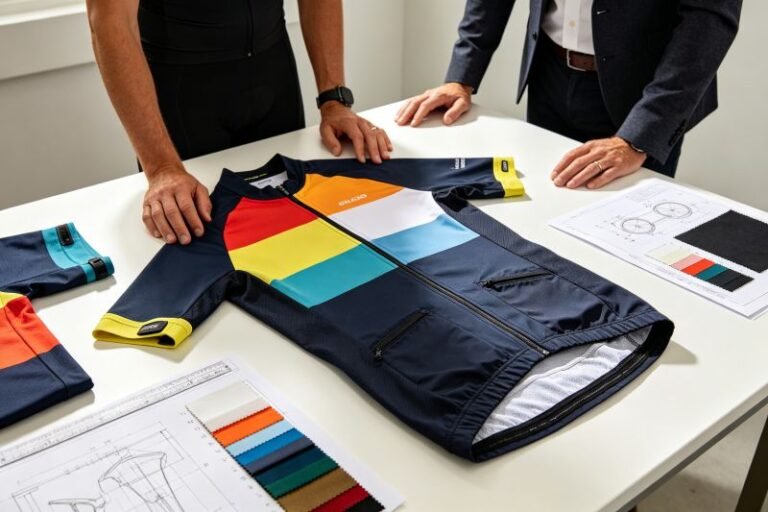
A relaxed club jersey, aerodynamic race jersey, MTB top, winter layer, and retail fashion jersey require different patterns. State the riding position, target rider, climate, intended distance, layering, and compression. Cycling jersey manufacturers need a clear fit category because the same chest measurement can behave differently with stretch, torso length, sleeve angle, and gripper tension.
Provide finished garment measurements, body references, grade rules, tolerances, and a fit model profile. Measure front and back length, chest, waist, hem, shoulder, sleeve opening, sleeve length, collar, zipper, and pocket placement. Approve a size set across the planned range rather than relying only on a medium sample.
Build measurable fabric and zoning specifications
Specify composition, weight, stretch direction, stretch percentage, recovery, air permeability, moisture behavior, UV protection when claimed, colorfastness, dimensional stability, pilling, and abrasion where relevant. Jersey panels may use different fabrics for the torso, side zones, sleeves, pockets, and collar. Each material needs a code and an approved physical standard.
Cycling jersey manufacturers may substitute fabrics that look similar online but behave differently during riding and washing. Require written approval before any substitute enters sampling or bulk. Test the actual print base because sublimation, dark colors, and heat exposure can change hand feel, stretch, opacity, or shade.
Control zippers, hems, grippers, and rear pockets
Specify zipper brand or performance level, length, puller, locking behavior, tape color, garage, placket, and installation tolerance. The zipper should lie flat in the riding position without severe waving. Define hem construction and silicone gripper width, stretch, recovery, placement, and skin-contact requirements.
Rear pockets need dimensions, opening control, reinforcement, load tests, and placement suitable for the fit. If a zip security pocket is included, specify the zipper, bag material, and usable volume. Cycling jersey manufacturers should test pockets with realistic phones, tools, food, or bottles as appropriate rather than checking an empty garment only.
Approve sublimation, colors, logos, and panel alignment
Sublimation supports full-coverage artwork without placing a heavy surface film on polyester, but color management still requires discipline. Supply vector artwork, color references, logo dimensions, placement coordinates, sponsor hierarchy, and panel maps. Approve a print strike on the intended fabric and record acceptable variation under controlled lighting.
Check color across different fabrics because the same digital value can print differently on mesh, solid knit, and stretch panels. Review alignment across zippers, sleeves, side seams, pockets, and hems. Small text and sponsor marks need minimum-size rules. Cycling jersey manufacturers should explain how artwork is nested, cut, bundled, and matched to prevent panel swaps.
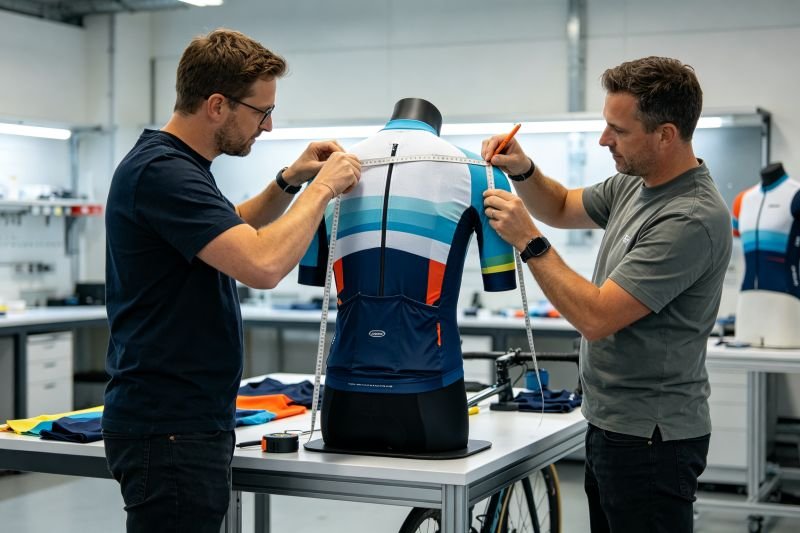
Test the complete decorated garment
A risk-based test plan may cover dimensional stability, colorfastness, print migration, stretch and recovery, seam strength, zipper cycling, gripper durability, pilling, abrasion, pocket load, and wash appearance. Claims about UV protection, recycled content, restricted substances, or other compliance points need the appropriate product and market evidence.
Test finished garments, not only raw fabric. Heat, printing, sewing, and washing can change performance. Agree who selects the laboratory, which method applies, who pays, and what happens after a failure. Strong cycling jersey manufacturers should be able to connect test records to the approved material and production lot.
Match the Supplier Model to Clubs or Retailers
Club and team programs
Clubs often need design support, fit samples, mixed sizes, individual member ordering, short reorder windows, and consistent colors over several seasons. A team store can reduce administration, but its rules should be reviewed. Confirm who collects payment, who owns member data, whether orders ship individually or in bulk, how returns work, and how late joiners reorder.
Club buyers should compare cycling jersey manufacturers on service as well as garment construction. A slightly higher unit price may be justified by accurate sizing tools, controlled artwork, transparent delivery, and a usable reorder system. The contract should still identify responsibility for missed names, wrong sizes, color variation, delayed shipments, and defective products.
Retail and private-label programs
Retailers need a different structure. Ask about custom neck labels, care labels, size labels, hangtags, barcodes, individual bags, carton marks, packaging compliance, and intellectual-property protection. Define exclusive artwork ownership and restrict unauthorized overruns. Confirm whether the supplier can reproduce the same fabric, color, and fit in a later season.
Retail buyers should model landed cost, margin, sell-through risk, and replenishment. A large minimum may improve price but increase inventory exposure. A small first order may carry material surcharges or limited color choices. Compare cycling jersey manufacturers using at least an initial order and a realistic repeat-order scenario.
RFQ and Approval Workflow for Cycling Jersey Manufacturers
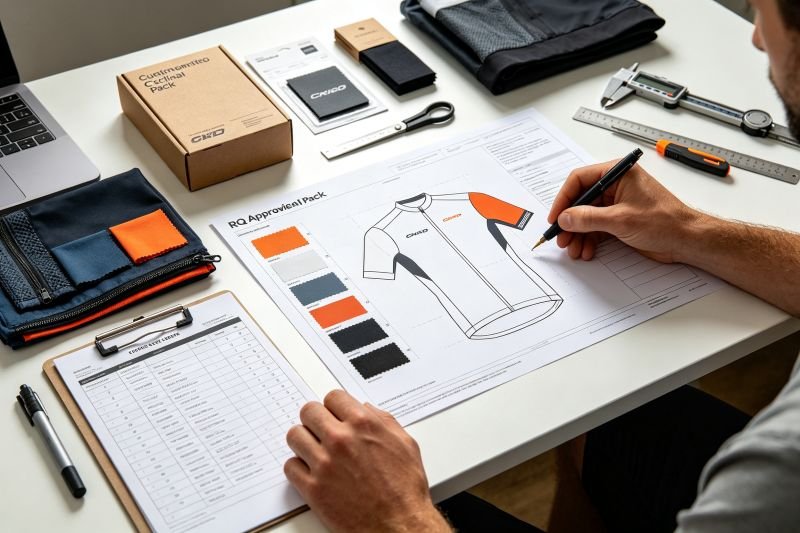
- Prepare one controlled brief. Include technical drawings, fit category, measurements, grade rules, bill of materials, panel map, zipper, pockets, gripper, artwork, colors, labels, packaging, quantity by size, tests, destination, and target schedule.
- Ask each candidate to identify its model. Record the legal seller, production site, print site, sample room, partner processors, incoterm, payment terms, and quality owner.
- Normalize the quotation. Separate design, samples, fabric minimums, garment MOQ, print strikes, zippers, labels, packaging, tests, inspection, freight, duties responsibility, and reorder pricing.
- Approve materials and color first. Sign the fabric codes, physical swatches, zipper, gripper, trims, and print strike before relying on a fit sample.
- Run fit and size-set samples. Test the jersey in riding position, loaded pockets, zipped and unzipped states, and the intended base layers. Record every correction.
- Approve a pre-production standard. Attach final artwork, measurements, workmanship limits, packaging, test plan, and inspection criteria to the purchase agreement.
- Monitor and inspect bulk. Review shade, panel matching, measurements, zippers, pockets, labels, packing, and order counts before shipment release.
This workflow makes responses from cycling jersey manufacturers comparable and reduces hidden assumptions. It also protects a club or retailer from approving an attractive digital mockup without controlling the physical product. Keep a signed sample, print strike, measurement report, artwork file, and packing standard for reorders.
How to Build a Defensible Shortlist
Select two or three cycling jersey manufacturers whose visible service model matches the buying program. A club may prioritize fit samples, team stores, and mixed-size reorders. A retailer may prioritize private labels, packaging, wholesale margins, fabric continuity, and inspection records. Send the same brief and require answers in a comparable format.
Score product understanding, evidence quality, clarification questions, fit process, material traceability, artwork control, facility transparency, testing, quotation completeness, communication, schedule, and remedies. Do not treat customer logos, certification images, or capacity claims as verified without checking current documents and scope.
Buyers considering the affiliated publisher can review the JH Sportswear Factory cycling-jersey category and main custom sportswear site before sending an RFQ. These are first-party pages. Apply the same sample, facility, testing, inspection, and contract requirements used for every candidate.
Frequently Asked Questions
What should clubs send cycling jersey manufacturers for a quote?
Clubs should send cycling jersey manufacturers technical drawings, fit requirements, measurements, grade rules, fabric performance, zipper and pocket details, gripper construction, artwork, sponsor logos, quantity by size, packaging, test requirements, delivery destination, and a target schedule. Ask each supplier to list every assumption and exclusion.
How should retailers verify a cycling jersey supplier?
Retailers should match the legal entity across licenses, quotations, contracts, bank details, invoices, and shipping documents. Confirm the sample room, printing site, sewing factory, fabric sources, subcontractors, and quality owner. Use a visit, live video review, or qualified third-party audit when the order risk justifies it.
Which fabric and fit details matter most?
The essential details include riding position, fit category, torso length, sleeve angle, stretch, recovery, fabric weight, ventilation zones, opacity, moisture behavior, zipper stability, hem grip, pocket load, grading, and wash performance. Approve the intended materials and test a full size set before bulk production.
Is sublimation suitable for custom cycling jerseys?
Sublimation is widely suited to polyester cycling jerseys because it supports detailed, full-coverage artwork without a heavy surface print. Buyers still need print strikes, color standards, panel-alignment rules, migration checks, logo-size controls, and wash approval on the actual bulk fabric.
How should clubs manage sizes and reorders?
Clubs should provide physical fit samples or a controlled sizing process, record member selections, set a clear order deadline, and retain approved measurements and artwork. The supplier agreement should define late orders, individual shipping, color continuity, reorder pricing, minimums, replacements, and discontinued fabrics.
Final Sourcing Takeaway
The strongest candidate is the one whose product evidence, service model, and controls match the buyer’s real program. Public pages from the six candidates show relevant cycling services, but they do not replace factory verification, fit testing, material approval, production monitoring, or a complete agreement. Cycling jersey manufacturers should compete against the same specification and evidence standard.
Start with the fit and product architecture, make every material and component measurable, and test the decorated garment in riding conditions. That discipline helps clubs and retailers choose cycling jersey manufacturers with fewer assumptions and a more dependable path to reorders.